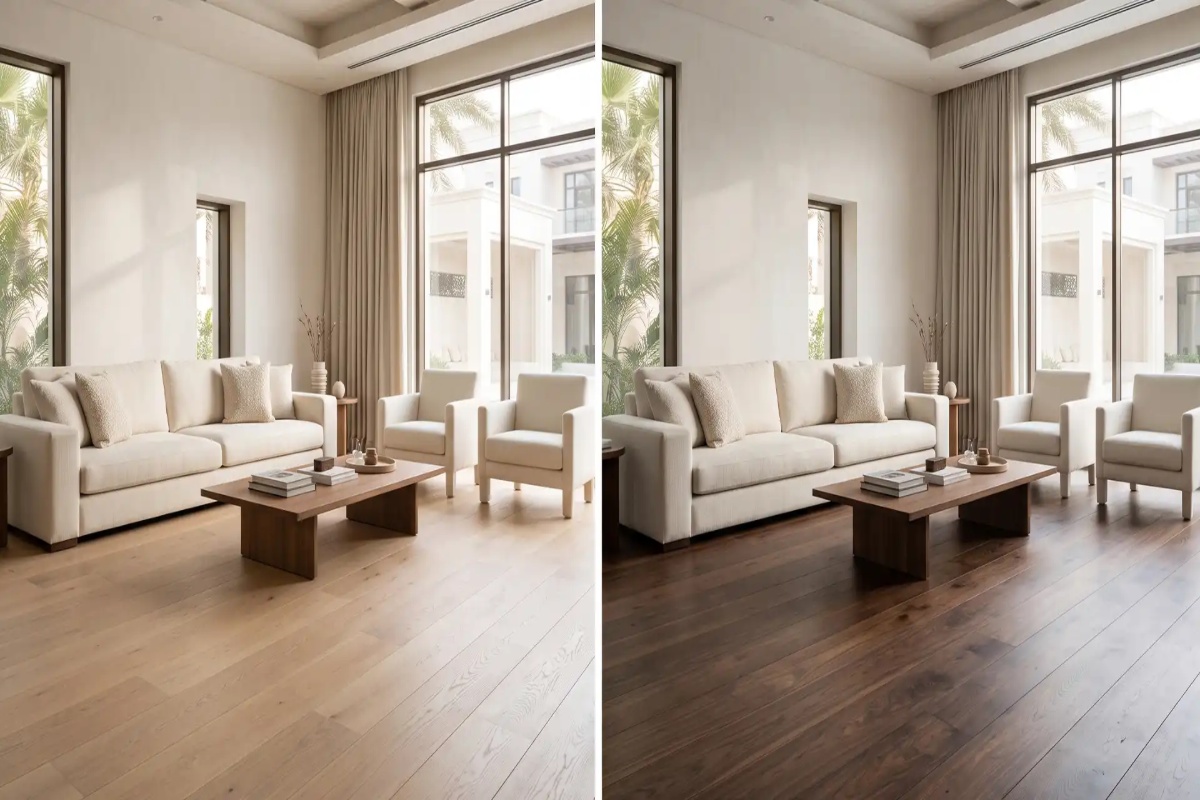
Comparing dark vs light hardwood floors is partly about appearance and partly about how the timber's finish will cope with daily use. Light shades can give a relaxed background to furnishings, while dark shades can create a stronger contrast. The practical choice also depends on grain, surface treatment, natural variation and the care the owner is prepared to provide.
Start by confirming the material. Solid and engineered wood contain real timber, whereas laminate and wood-effect vinyl reproduce its appearance using a decorative layer. A catalogue such as Floorna lists laminate and vinyl separately, helping keep those categories distinct.
In a comparison of dark vs light hardwood floors, species names alone cannot explain the appearance. Natural tone, grading, stain and surface finish can each influence the result. Ask whether the sample represents the typical colour range and how much variation to expect between boards.
When exploring oak wood flooring, compare several pieces rather than one small corner. Knots, grain direction and variation may be subtle in a single sample but much more prominent across a room. Decide whether you want that variation to be a feature or a quieter background to the furniture.
A polished dark board and a matt dark board can create very different impressions. Reflections may emphasise the surface, while a less reflective finish can make the grain easier to read. The preferred effect depends on the room's lighting and the atmosphere you want, rather than a universal rule.
When assessing dark or light hardwood floors, ask to see the same or similar colour in more than one finish. View samples flat, with light coming from the room's main window. This makes it easier to judge glare and texture before committing to a large area.
Existing doors, stair finishes, stone thresholds and fitted furniture deserve priority because they are harder to replace than cushions or curtains. Compare the samples directly beside them. A warm board and a cool stone can work together, but the contrast should be intentional.
The dark vs light hardwood floors decision becomes clearer when the largest furniture pieces join the comparison. A pale sofa may stand out well against a darker base, while dark furniture might need a lighter rug to remain visually distinct. Avoid expecting the floor alone to create the complete scheme.
For dark vs light hardwood floors, dust visibility depends on its contrast with the surface. Fine pale debris can be conspicuous on a dark finish, while darker dirt may stand out on a pale one. In a UAE home, assess the actual entrance and balcony routes instead of assuming that either shade will stay looking clean for longer.
Ask how the proposed wood finish is maintained and how a local mark is treated. Refinishing options depend on construction, the remaining timber surface and the manufacturer's guidance. Do not assume every engineered board can be sanded repeatedly or that a scratch can always be corrected without affecting the surrounding colour.
Real wood and its finish can change appearance with exposure and age. Ask the supplier how the specific species and treatment are expected to behave, then discuss shading where direct sunlight falls strongly. Avoid relying on a broad claim that all dark or all light floors change in the same way.
Consider the furniture arrangement too. A rug or large cabinet may cover areas that receive different exposure from the surrounding floor. Keep the care instructions and any advice about moving furnishings with the product records so those details are available after installation.
If the main priority is a timber appearance, comparing engineered wood vs laminate can clarify the alternatives. Engineered wood has a real wood surface; laminate uses a decorative design. The distinction matters when discussing repairs, moisture limits and long-term maintenance, even if two samples look similar.
For example, natural wood look laminate can provide a useful colour reference without being described as hardwood. Egger collections, including NatureSense, should be assessed on their own specifications. A wood effect is a design choice, not evidence of a solid timber construction.
Resolve the dark vs light hardwood floors comparison by checking two shortlisted finishes in the room over several lighting conditions. Compare several boards, confirm the expected variation and read the maintenance requirements. Keep the agreed product and finish reference with the quotation. The right shade should feel convincing beside the home's permanent finishes and remain a practical choice for the people who use it.

This post has been authored and published by one of our premium contributors, who are experts in their fields. They bring high-quality, well-researched content that adds significant value to our platform.









Dutables provides reliable educational resources, study materials, academic guides, and learning content to help students and educators succeed.