Emergencies do not stop when the sun goes down. Floods, earthquakes, storms, fires, transport accidents and search and rescue operations often continue through the night, and some of the most critical work happens in the dark. At the same time, disasters frequently knock out the power grid, leaving streets, buildings and entire neighbourhoods without light.
In these conditions, lighting is not a convenience. It is essential infrastructure. Responders need to see hazards, locate casualties, operate heavy equipment and coordinate teams safely. Affected communities need light at shelters, medical stations and distribution points to feel secure and access help.
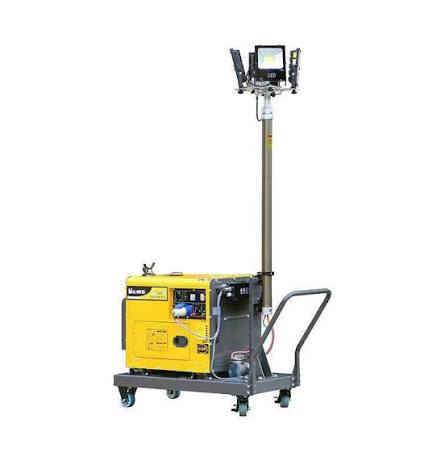
Mobile lighting towers have become one of the most valuable tools in emergency response because they can deliver powerful, wide-area illumination quickly, almost anywhere. This article explains how lighting towers support emergency services and disaster relief, which features matter most and how to deploy them effectively.
Safety of responders. Rescue teams often work among collapsed structures, floodwater, debris, damaged power lines and unstable ground. Good lighting allows them to identify hazards and move safely, reducing the risk of secondary injuries.
Speed and effectiveness. Searching for survivors, clearing roads and restoring services all happen faster when teams can see clearly. In the first hours after a disaster, time can be the difference between life and death.
Coordination. Command posts, staging areas and helicopter landing zones need clear light so that teams, vehicles and equipment can be organised efficiently.
Security and reassurance. For displaced people, darkness increases anxiety and vulnerability. Well-lit shelters, camps and aid distribution points improve safety and help restore a sense of normality.
Search and rescue. After earthquakes, building collapses and landslides, rescue teams work around the clock. Lighting towers illuminate the search area, allowing teams to operate cranes, cutting tools and heavy machinery safely at night.
Floods and storms. Lighting supports pumping operations, flood barrier installation, evacuation routes and repair of damaged infrastructure when streetlights are out.
Fires and wildfires. Incident command posts, crew staging areas and mop-up operations benefit from reliable light, especially in rural areas without power.
Road and rail accidents. Major incidents on motorways and railway lines often occur far from permanent lighting. Towers help investigators, recovery crews and medical teams work safely while protecting the scene from passing traffic.
Temporary shelters and relief camps. Displacement camps, field hospitals and food and water distribution points need lighting for safety, hygiene and security throughout the night.
Utility restoration. Power, water and telecommunications crews use lighting towers to work through the night restoring essential services.
Public health emergencies. Temporary testing sites, vaccination centres and triage areas may operate outdoors or in tents where lighting must be provided quickly.
Not every lighting tower is equally suited to emergency work. The following features are especially valuable.
Rapid deployment. Towers that can be delivered, positioned and operating within minutes are essential. Hydraulic or quick-crank masts and simple controls help teams set up quickly under pressure.
Long runtime. Emergencies can last days or weeks, and fuel deliveries may be disrupted. Towers with large fuel tanks, efficient LED lamps or battery and solar hybrid systems can run for long periods without refuelling. Many modern LED towers can operate for several days on a single tank.
LED lighting. LED lamps provide instant full brightness with no warm-up time, use far less fuel than older metal halide lamps and offer good colour rendering, which helps responders identify injuries, hazards and materials accurately.
Mobility. Compact, towable units can be moved by standard vehicles, and some can be lifted by forklift or helicopter to reach remote or cut-off areas. Narrow or lightweight designs are useful on damaged roads.
Robust construction. Emergency sites are harsh. Towers should withstand rain, wind, dust and rough handling. Check the wind rating for operation with the mast raised, particularly during storms.
Low noise and emissions. In shelters, hospitals and residential areas, quieter hybrid or solar towers reduce disturbance and exhaust fumes. Silent operation can also help rescuers listen for survivors trapped under debris.
Auxiliary power outlets. Some lighting towers include power sockets that can run small tools, chargers or communication equipment, adding useful flexibility on site.
Prioritise critical areas. Light the most important zones first: active rescue sites, medical and triage areas, command posts, access routes and hazards such as open excavations or damaged structures.
Raise the mast fully and aim downward. Full mast height spreads light evenly and reduces glare. Angle lamps down onto the work area rather than into the eyes of responders or approaching drivers.
Light from multiple directions. Rubble, vehicles and equipment create deep shadows. Positioning towers on different sides of a site reduces blind spots.
Choose stable ground. Floods and earthquakes often leave ground soft or unstable. Deploy outriggers, check the surface carefully and keep towers away from collapse zones and floodwater edges.
Watch overhead hazards. Damaged power lines may still be live. Maintain safe clearances when raising masts.
Plan fuel logistics. Establish a refuelling schedule early, and consider hybrid or solar units for long operations where fuel supply is uncertain.
Avoid dazzling aircraft and drivers. Near helicopter landing zones and roads, position and aim lights carefully to avoid blinding pilots or motorists.
The effectiveness of lighting in an emergency depends heavily on preparation. Authorities, emergency services, humanitarian organisations and large facility operators can take several steps in advance.
Light is one of the first things lost in a disaster and one of the most important things to restore. Mobile lighting towers give emergency services and relief organisations the ability to keep working safely through the night, protect vulnerable people and restore a sense of order in chaotic conditions.
The most effective emergency lighting towers combine rapid deployment, long runtime, efficient LED lighting, rugged construction and flexible power options. When they are planned for in advance, positioned carefully and supported by reliable fuel and maintenance, they become a powerful tool for saving lives and speeding recovery.

This post has been authored and published by one of our premium contributors, who are experts in their fields. They bring high-quality, well-researched content that adds significant value to our platform.







Dutables provides reliable educational resources, study materials, academic guides, and learning content to help students and educators succeed.